
The Quiet Work Was What Kept the Product Alive
— A reflection from 19 years in engineering and why we need to rethink how we evaluate our teams
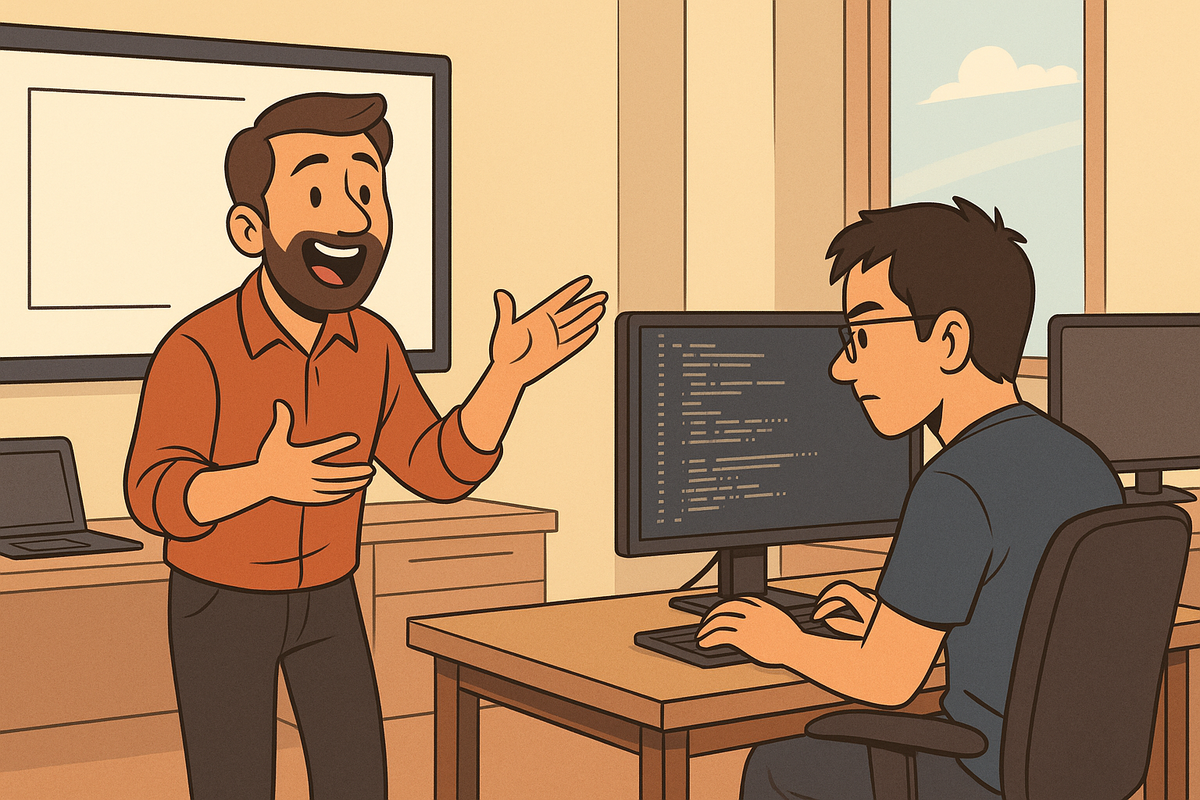
During my time as a CTO at a startup, I worked with two engineers who taught me a lesson I didn’t fully understand until they were gone. Both were skilled and intelligent. Both seemed dedicated. But the way they were perceived inside the company—and the reality of their contributions—ended up being completely different.
One of them spoke with clarity and confidence in every meeting. He blogged about technology trends, kept an active presence in the developer community, and always had a well-articulated roadmap for his career. Leadership saw him as proactive, ambitious, and high-impact.
The other engineer was quiet. He didn’t volunteer opinions unless necessary, and he never tried to draw attention to himself. He simply delivered what was assigned, consistently and without drama. He also picked up the tedious and inconvenient work—the kind everyone agrees is important but no one wants to own.
If you had asked anyone at the time which of the two was more valuable to the company, the answer would have seemed obvious.
But when both engineers left and we began organizing the codebase and operational artifacts, the picture changed quickly.
The engineer who communicated so well had left almost no trace of meaningful contribution to core functionality. His work was polished, visible, and impressive—just not tied to the product’s execution.
The quiet engineer, on the other hand, had laid down most of the foundation the product relied on. Deployment workflows, edge-case handling, emergency patches, infrastructure scripts, cleanup tasks—work that doesn’t get applause, yet prevents outages, supports scaling, and keeps releases from derailing.
The code told a story that the meetings never revealed.
It was then that I realized how easily a team can mistake visibility for impact, and how often the work that looks less important ends up being what keeps a product alive. The danger is simple: when organizations reward only what looks impressive, the unglamorous work stops getting done. And when that work disappears, resilience disappears with it.
After nearly two decades of building software and managing engineering teams, I’ve come to one conclusion:
An engineer’s real contribution is found in their trail of execution, not in their presentation.
Commits, issue resolution, deployment history, reduction of tech debt, handling of failure scenarios—these are the artifacts that show who is truly moving a product forward. Yet most managers cannot interpret these signals easily. So evaluation defaults to presence, confidence, articulation, and perception.
That gap quietly erodes teams.
It causes the wrong people to burn out, and the wrong people to be celebrated.
And it destabilizes organizations in ways that only surface later.
This realization is what led me to start building Aline.team—not from theory, but from necessity. I wanted a way for engineering activity to be interpreted in context, so teams could see who maintains stability, who resolves complexity, and who sustains momentum. Not to rank people. Not to score developers. But to ensure that the people who keep the product alive are not invisible.
Teams become stronger when quiet contribution is recognized.
They retain better people.
They collaborate with more trust.
They grow without losing their foundation.
I believed that then, and I believe it even more now.