
When AI Speeds Us Up, But Slows Down How Teams Actually Learn
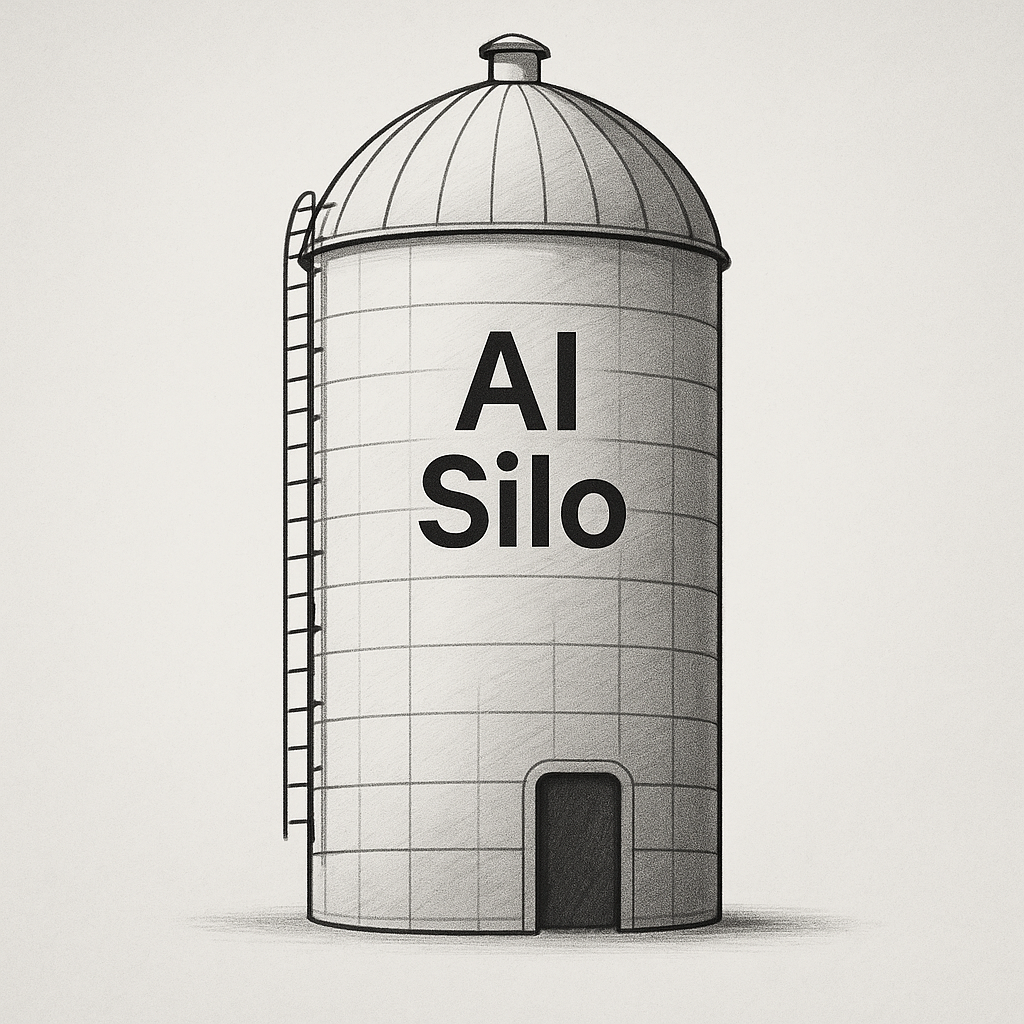
After almost two decades of building and managing software teams, I’ve never seen development move as fast as it does now.
A bug pops up? Ask AI.
Need a quick draft of a feature spec? Ask AI.
Trying a new architecture? Ask AI first, docs later.
It’s convenient. It’s fast.
And honestly, it’s impressive.
But there’s a quiet problem emerging behind all that speed:
we’re losing something we’ve always relied on — indirect experience.
Not the things we learned the hard way, but the things we learned because someone else already went through the pain.
And that loss is starting to show up in how teams build products.
Direct experience vs. indirect experience — and why the second one matters more than we think
When you’ve been in engineering long enough, you realize most of your “engineering intuition” didn’t come from textbooks or bootcamps.
It came from two sources:
- Direct experience — breaking production, fixing it, and remembering the panic forever.
- Indirect experience — the shortcuts, warnings, and weird edge cases passed down by teammates, senior engineers, and project scars you didn’t personally earn.
Indirect experience is what prevents teams from stepping into the same hole twice.
It’s the safety net behind good engineering judgment.
But lately, that safety net is thinning out.
Not intentionally — it’s just that most questions go to AI now instead of people.
And AI can't share the experiences it never lived.
A small comment that saved an entire system
Years ago, when Korea first introduced an AML (Anti-Money Laundering) system,
I was involved in the database design phase.
At one point I suggested using the national ID number as a primary key.
It sounded reasonable. Government-issued. Unique. Stable.
Or so I thought.
A senior developer in the room quietly said:
“National ID numbers in this country actually have thousands of duplicates.”
I had no idea.
If he hadn’t said that one sentence,
we might’ve built the entire core structure on a faulty assumption.
That one line of experience — an experience I never personally had —
saved the whole system from going off the rails.
That’s the power of indirect experience.
And it used to flow naturally inside teams.
Today, those moments barely happen
A developer hits a wall? AI gives them a workaround.
A junior engineer wonders about a design choice? AI explains it with confidence.
A PM wants to understand an edge case? AI provides an answer that sounds correct.
The problem isn’t the speed.
The problem is the missing context — the stuff that only comes from people who have lived through the consequences.
AI can explain “how to do something.”
But it can’t tell you why a past team regretted doing it,
or why a certain pattern failed after scale,
or what local regulation, legacy behavior, or hidden constraint will break your beautiful design later.
That’s where cracks start appearing:
products ship faster but with thinner understanding behind them.
How this ties into what we’re building at Aline.team
Aline.team isn’t just another “insight dashboard.”
It’s a tool designed to bring back the missing context in modern software teams.
As teams move faster, the first thing that gets lost is the story behind the work —
who’s doing what, how pieces connect, where the risks are forming, which flows are slowing down, how execution is actually unfolding.
By analyzing real development activity — commits, issues, reviews, patterns —
we make those invisible connections visible again.
And when the context becomes clear, indirect experience naturally returns:
- People spot risky patterns sooner
- Teams understand each other’s decisions
- Newcomers learn how things actually work
- PMs and engineers stay aligned without extra meetings
- Tribal knowledge stops disappearing into private minds
Execution becomes transparent, not just fast.
And transparency is what keeps teams from repeating avoidable mistakes.
The bottom line
AI is incredible at increasing execution speed.
But speed without direction isn’t progress — it’s drift.
The direction still comes from people:
the stories behind past failures,
the lessons learned in production,
the “don’t do that, we’ve been burned before” warnings,
the shared understanding that forms over time.
We’re moving into an era where teams ship faster than ever,
yet understand each other less.
The value of experience — especially the indirect kind — is more important now, not less.
And helping teams reconnect those missing dots
is exactly why we’re building Aline.team.