
When AI Writes the Code, Who Owns the Decision?
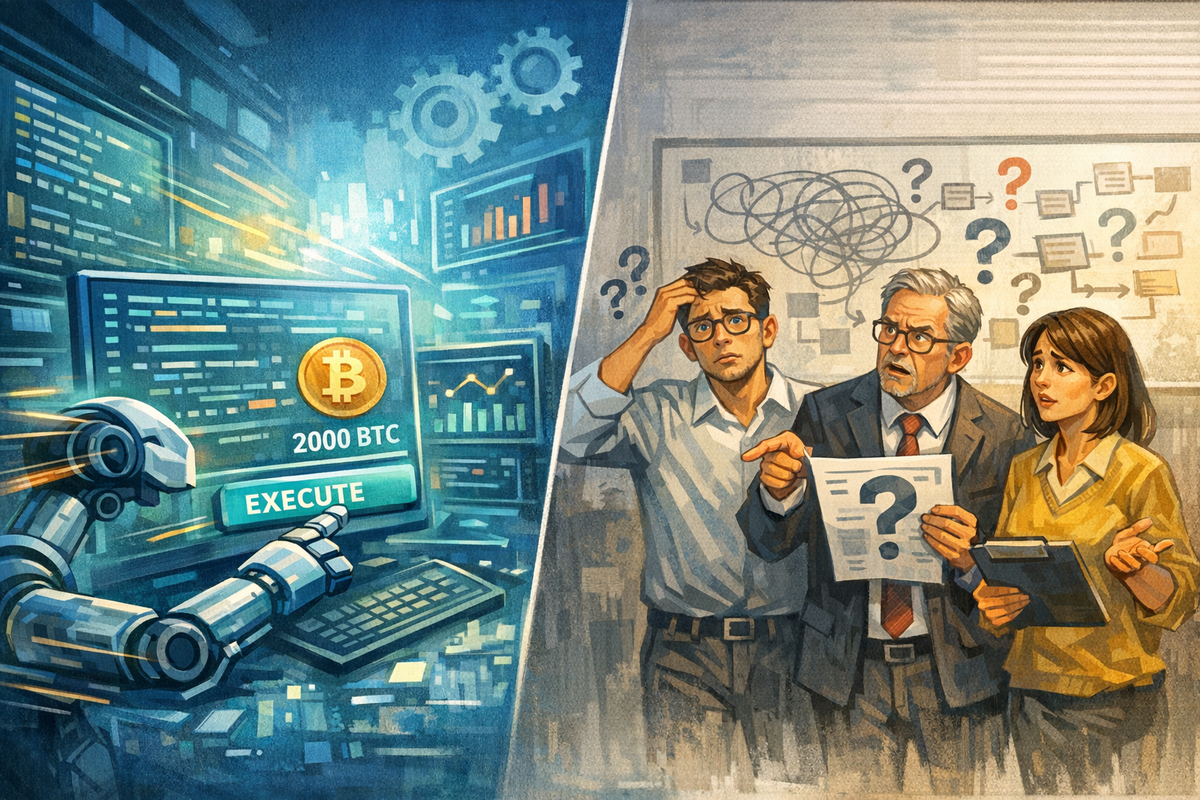
Last week, an unusual incident occurred at a crypto exchange.
A promotional event was supposed to distribute 2,000 KRW (approximately $1.50 USD) per user.
Instead, due to a unit mismatch in the payout logic, 2,000 BTC was transferred.
The exact root cause isn’t the focus here.
There could be several explanations: an implementation detail, an operational oversight, or a missing validation step.
That’s not the interesting part.
What is interesting is the question this incident raises.
What if this logic had been generated by an AI system?
This Kind of Failure Isn’t New
At a technical level, this wasn’t a sophisticated failure.
A missing unit check.
No upper bound on values.
Promotional logic living too close to production systems.
These mistakes existed long before AI entered the picture.
Human-written systems have failed this way for decades.
So this isn’t an “AI problem.”
It’s a system design problem.
Why AI Changes the Conversation
Now imagine a slightly different scenario.
An AI agent generates the payout logic.
A developer reviews it quickly, sees nothing obviously wrong, and approves the deployment.
The system works—until it doesn’t.
When something goes wrong, the questions change:
- Who actually made this decision?
- Who chose the unit?
- Who decided this value was safe?
The code exists.
The logs exist.
The outcome is undeniable.
But the decision path is unclear.
That’s the uncomfortable part.
Execution Is Automated. Accountability Is Not.
AI systems are extremely good at execution.
They optimize for goals, satisfy constraints, and move fast.
What they don’t naturally preserve is why a specific choice was made.
Why this threshold?
Why this unit?
Why was this considered acceptable risk?
When those answers aren’t recorded, teams end up saying:
“The system behaved as designed.”
Which often means:
“We can’t clearly explain how this decision happened.”
That’s not a blame issue.
It’s a structural one.
Automation Amplifies Small Mistakes
Automation can reduce errors—but it also amplifies them.
When money, permissions, or production operations are involved,
a single unchecked assumption can scale instantly.
The more autonomy systems have,
the more important it becomes to preserve decision context.
Not more dashboards.
Not more alerts.
Context.
What Will Differentiate Teams Going Forward
AI adoption will become table stakes.
Everyone will use similar tools.
The real difference will be here:
- Can the team explain why a decision was made?
- Can they trace the reasoning behind automated behavior?
- Can they separate system execution from human judgment?
Teams that can answer those questions will scale confidently.
Teams that can’t will move fast—but feel increasingly uneasy doing so.
Final Thought
This incident wasn’t caused by AI.
But it’s a preview of the kinds of questions AI-driven systems will force us to answer.
In an era where machines execute,
humans are responsible for meaning.
Not just what happened—but why it happened.
And that distinction is going to matter more than ever.